Do you want to export data from your Gravity Forms to Excel or CSV? There are multiple ways to do that. We describe here our favorite ones, like the default Gravity Forms export functionality (only CSV) and the Add-ons DataTables and GravityExport.
Using the GravityExport plugin
This Gravity Forms Add-on from Katz Web Services, Inc. allows you to create a secure download link on your site where front-end visitors can download (filtered) results. You can try our demo below to see how the Excel file turns out.
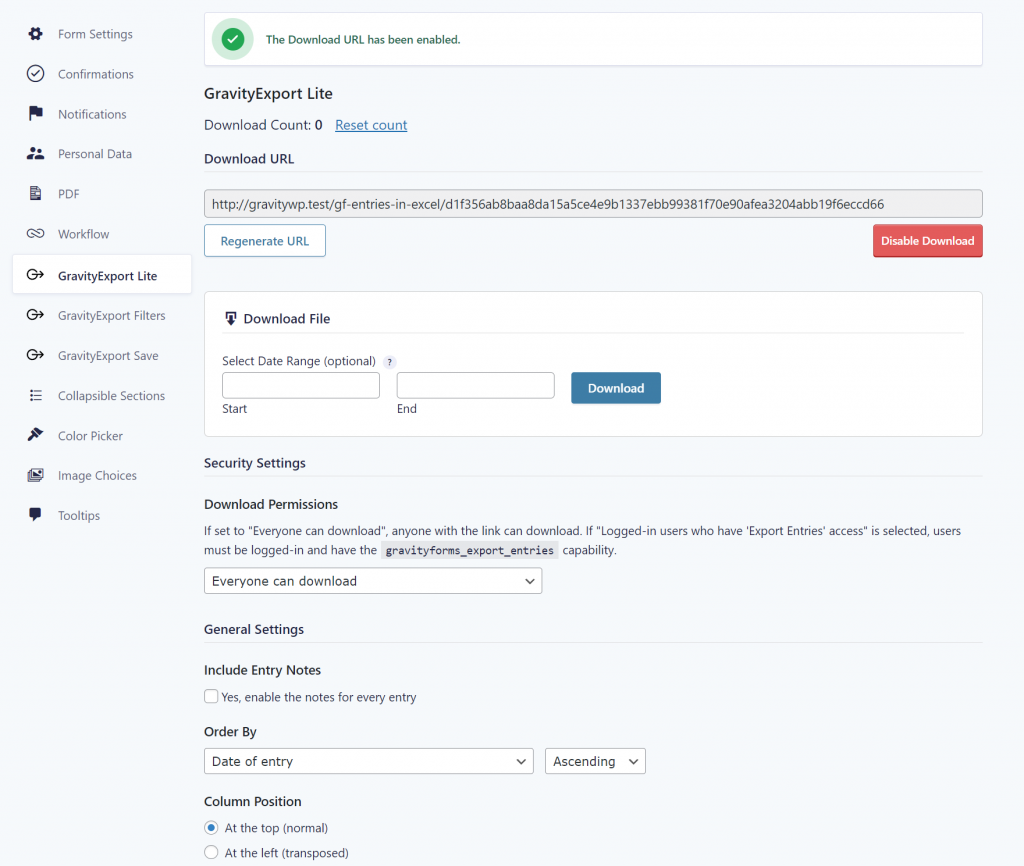
Demo: Try Export yourself
Downloading CSV in Admin Area
As administrator you have the option in the wp-admin area to download all entries in CSV format. Go to Forms and select the submenu item Import/Export.
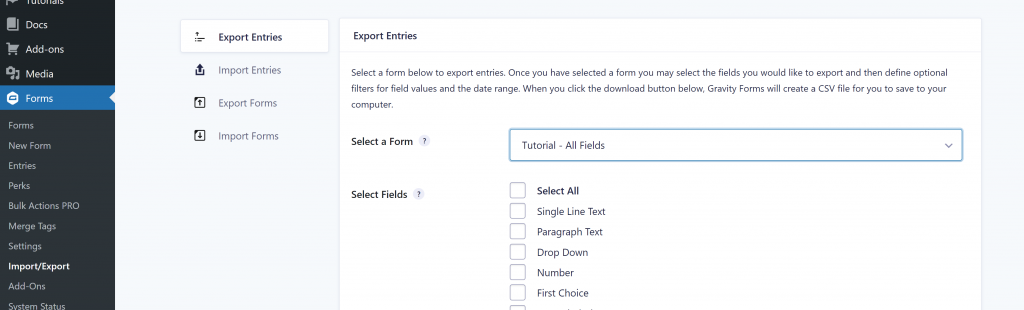
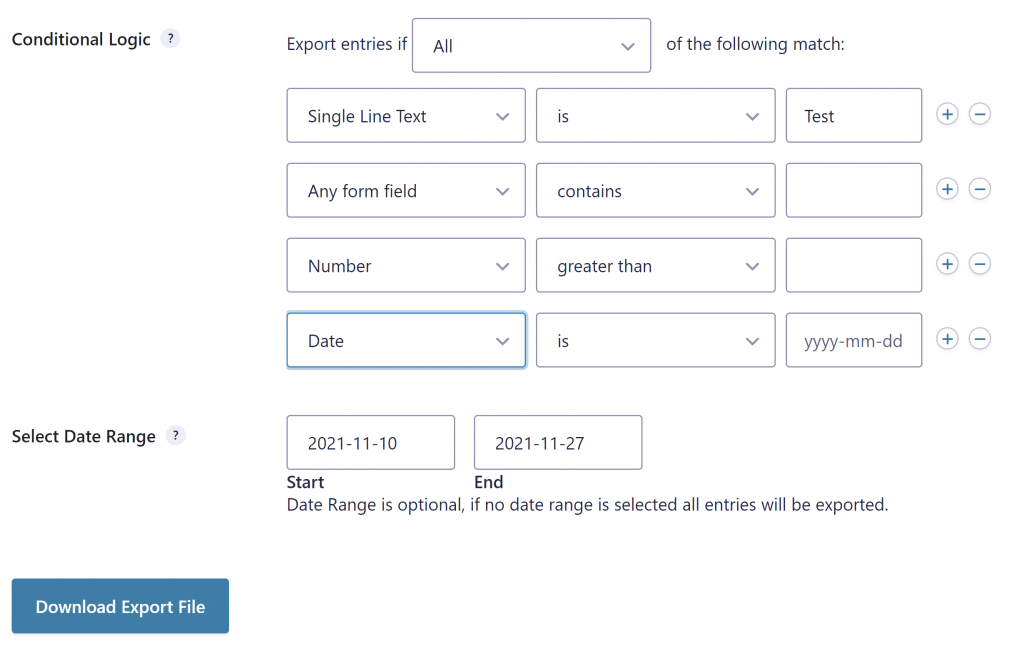
There are also options to filter results:
- Conditional Logic: define specific conditions that need to match for the entry to be included in the CSV export.
- Select Data Range: select a start or end date or a range between two dates.
Using DataTables
With GravityView and the addon DataTables it gets really easy to export data from Gravity Forms directly to Excel. Ofcourse, Gravity Forms offers the possibility to export data in a .CSV format. But you probably also want the option to download directly to an Excel format from the front-end of your website.
Our Premium add-ons for Gravity Forms

Advanced Number Field
Functionality for Number Fields, like rounding or only absolute numbers, fixed point notation, range calculation, custom units like % or m2 & show as slider.

All Entries
All your new Gravity Forms entries in one central place. Stop navigating between multiple forms to find new entries. Get immediate oversight and full control with a powerful, unified dashboard.

Update Multiple Entries
Trigger the update of multiple entries in a target form by submitting an entry in a trigger form.

API Connector
Connect Gravity Forms to External API's: Query the API using form field values and automatically fill other form fields with the API response.
Read tutorials about

How to Create a Public Submission Business Directory in WordPress (Gravity Forms + GravityView)
Build a moderated business directory where users submit listings through a form, admins approve entries, and approved businesses appear in a searchable GravityView directory.

How to Create an Event Workshop Registration + Waitlist System in WordPress
This guide shows how to set up a workshop registration + waitlist system in WordPress: register attendees until capacity is reached, waitlist the rest, approve entries, and auto-promote people when a seat opens using Gravity Forms, Gravity Flow, and GravityView.

Gravity Flow Form Submission Step Tutorial
The Gravity Flow Form Submission step pauses a workflow until another form is submitted, then continues once the handoff is complete. This guide shows how to connect two forms, prefill fields with mapping, send the correct secure link, and troubleshoot the most common “workflow didn’t move” issues.

Gravity Flow Delete an Entry Step Tutorial
The Gravity Flow Delete Entry step lets you trash or permanently remove Gravity Forms entries as part of a workflow. This guide covers the key settings, scheduling options (delay or date-based), and safe testing tips so you can follow retention and privacy rules with confidence.
