Do you want a graphical overview of all the workflows in your Gravity Forms and the ability to print it or save as PDF? With the Flowchart Add-on from Gravity Flow you easily create an overview of all your Workflow Steps.
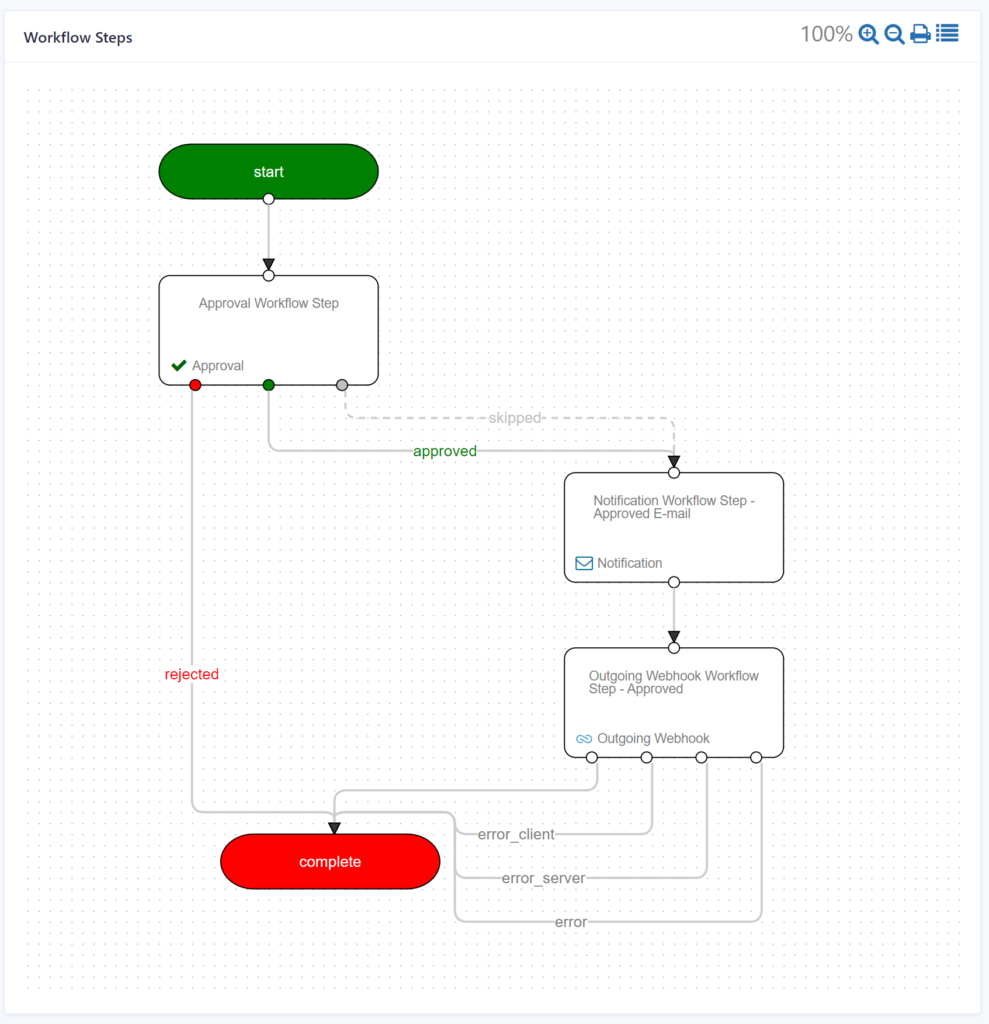
Example Flowchart
In this example you see a Start Workflow Step. The next step is an Approval Workflow Step. If the entry in this Workflow Approval Step is rejected, the workflow is completed. If it’s approved or skipped an automatic Notification e-mail is send and an outgoing Webhook triggered.
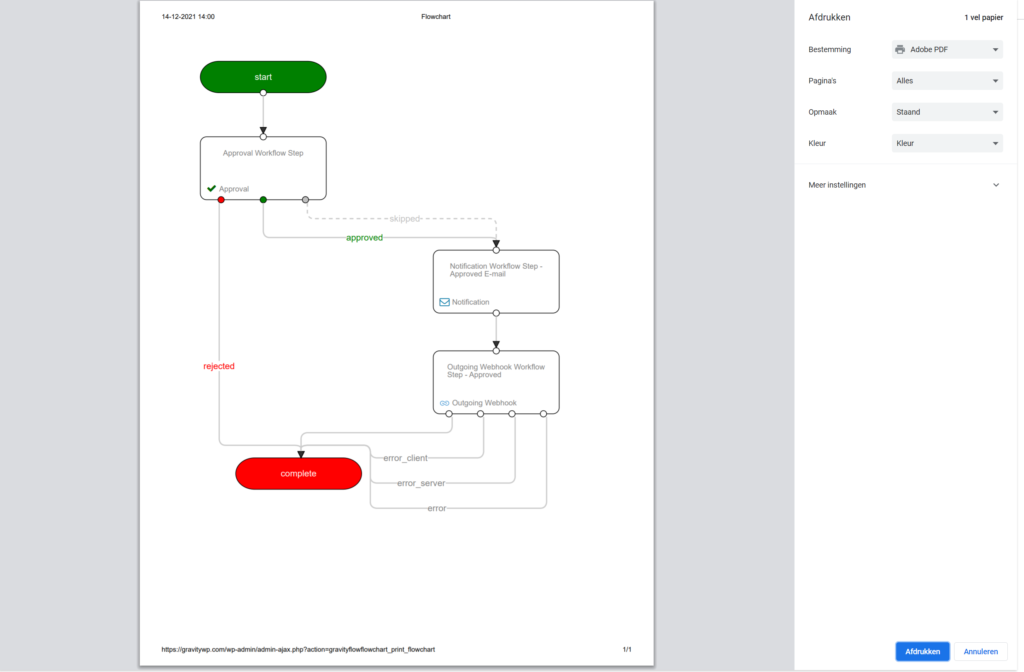
Save the Flowchart as PDF
Clicking the Print Icon on top of the Flowchart, you can print the Flowchart or save it as PDF.

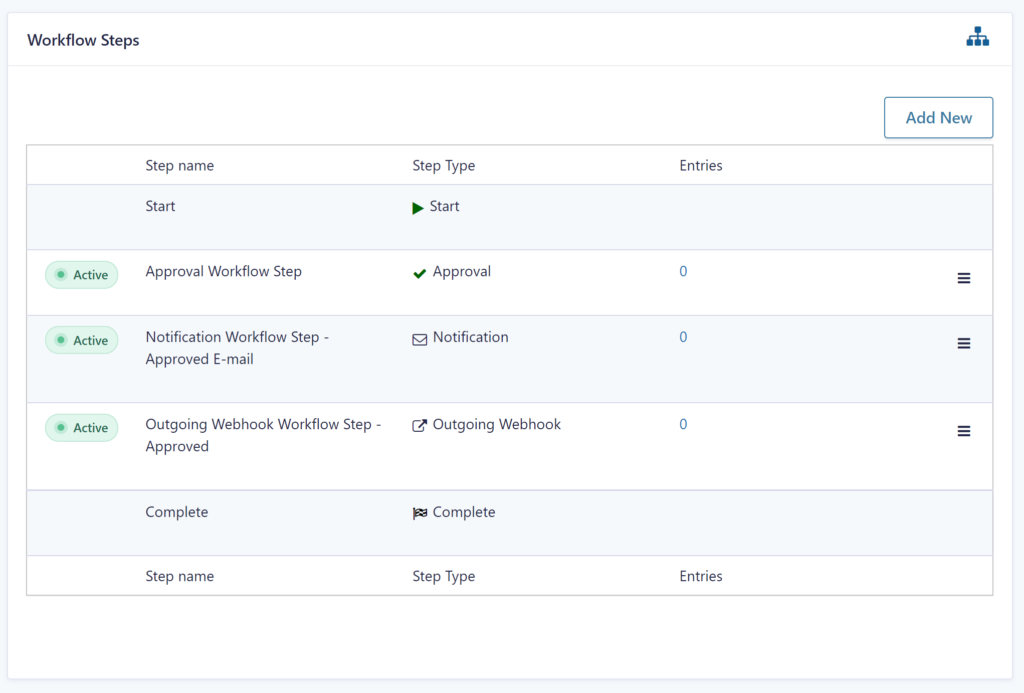
Default Workflow Steps overview
You can click on the Flowchart Icon in the right top corner about your default Workflow Steps overview in the Gravity Forms settings to generate the Flowchart:

In this example the following Workflow steps are used. This is how it looks like in the default Workflow feed overview:
Our Premium add-ons for Gravity Forms

List Dropdown
Add a Dropdown Select with choices to a column or multiple columns in a Gravity Forms List Field.

Entry to Database
Integrates Gravity Forms with internal or external databases, offering flexible mapping of form fields to database columns and real-time synchronization between entries and database rows.

List Number Format
With this Gravity Forms Add-on you can change List Field columns into a number field, do calculations within a row or column. Extra merge tags are available with total counts of columns.
List Datepicker
Add a Datepicker with calendar select to a column or multiple columns in a Gravity Forms List Field.
Read tutorials about

How to Create a Public Submission Business Directory in WordPress (Gravity Forms + GravityView)
Build a moderated business directory where users submit listings through a form, admins approve entries, and approved businesses appear in a searchable GravityView directory.

How to Create an Event Workshop Registration + Waitlist System in WordPress
This guide shows how to set up a workshop registration + waitlist system in WordPress: register attendees until capacity is reached, waitlist the rest, approve entries, and auto-promote people when a seat opens using Gravity Forms, Gravity Flow, and GravityView.

Gravity Flow Form Submission Step Tutorial
The Gravity Flow Form Submission step pauses a workflow until another form is submitted, then continues once the handoff is complete. This guide shows how to connect two forms, prefill fields with mapping, send the correct secure link, and troubleshoot the most common “workflow didn’t move” issues.

Gravity Flow Delete an Entry Step Tutorial
The Gravity Flow Delete Entry step lets you trash or permanently remove Gravity Forms entries as part of a workflow. This guide covers the key settings, scheduling options (delay or date-based), and safe testing tips so you can follow retention and privacy rules with confidence.

