In some cases you want to show some fields as ‘Read only’ in Gravity Forms. Especially when you use Dynamic Population, you may want to only show the information without visitors of the site being able to change this information.
How to make a Gravity form field Read Only?
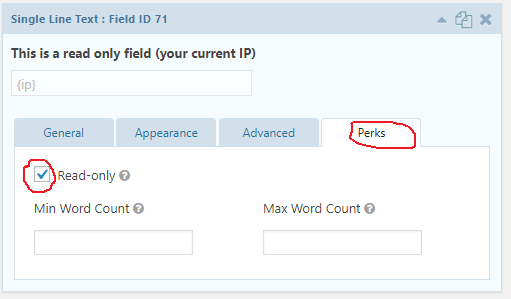
There is a very easy solution to this, the great plugin Gravity Perks, which give you lots of easy enhancements to Gravity Forms. When you have installed it, go to the Gravity Forms formbuilder and select the form field you want to mak read only. Click the Perks Tab and select read-only. That’s it!
How to CSS style your Read Only Gravity Forms fields?
You can style your Read Only field in Gravity Forms quite easily. For example putting a blue border around the Read Only field, try this in your .css file (or custom css functionality in your Theme):
input[readonly],
select[readonly],
textarea[readonly],
.gform_wrapper [disabled='disabled'],
.gform_wrapper input[disabled='disabled']  {
     border: 1px solid #007BC7;
}
Our Premium add-ons for Gravity Forms

Update Multiple Entries
Trigger the update of multiple entries in a target form by submitting an entry in a trigger form.

Entry to Database
Integrates Gravity Forms with internal or external databases, offering flexible mapping of form fields to database columns and real-time synchronization between entries and database rows.

Field to Entries
Create entries based on Checkboxes & Multi Select choices & List Field rows.

JWT Prefill
Fill forms with data you can trust. Prefill Gravity Forms fields with a secure token instead of links with editable url parameters, so your data is accurate, tamper-proof, and ready to use.
Read tutorials about

How to Create a Public Submission Business Directory in WordPress (Gravity Forms + GravityView)
Build a moderated business directory where users submit listings through a form, admins approve entries, and approved businesses appear in a searchable GravityView directory.

How to Create an Event Workshop Registration + Waitlist System in WordPress
This guide shows how to set up a workshop registration + waitlist system in WordPress: register attendees until capacity is reached, waitlist the rest, approve entries, and auto-promote people when a seat opens using Gravity Forms, Gravity Flow, and GravityView.

Gravity Flow Form Submission Step Tutorial
The Gravity Flow Form Submission step pauses a workflow until another form is submitted, then continues once the handoff is complete. This guide shows how to connect two forms, prefill fields with mapping, send the correct secure link, and troubleshoot the most common “workflow didn’t move” issues.

Gravity Flow Delete an Entry Step Tutorial
The Gravity Flow Delete Entry step lets you trash or permanently remove Gravity Forms entries as part of a workflow. This guide covers the key settings, scheduling options (delay or date-based), and safe testing tips so you can follow retention and privacy rules with confidence.